Let's name what's actually happening
Your partner isn't rejecting pleasure. They're rejecting something else. Maybe they think introducing a lemon vibrator means you're not satisfied with them. Maybe they believe toys are for people who have "issues." Maybe they're embarrassed, or they've internalized outdated ideas about what sex is supposed to look like. Whatever the story is, it's not about the toy.
I've worked with hundreds of couples where one person wants to explore lemon vibrators and the other becomes defensive. The breakthrough never happens by pushing harder. It happens by understanding the actual fear underneath the hesitation.
The fear behind the resistance
Most partner hesitation falls into three buckets, and each one needs a different conversation.
Fear #1: "This means I'm not enough." Your partner thinks introducing a toy signals that they can't satisfy you. This is the most common resistance, and it's driven by insecurity, not logic. The fix isn't arguing that toys don't replace partners. That sounds like gaslighting to someone who's already feeling inadequate. The fix is getting specific: "I want to explore this WITH you, not instead of you."
Fear #2: "This is weird or shameful." Some people grew up with the idea that sex has strict rules. Toys feel like a violation of that boundary. For these partners, the issue isn't about you or your relationship. It's about internalized shame around pleasure itself. Pushing will make them dig in harder.
Fear #3: "I don't understand what this is or how it works." A lot of hesitation is actually just confusion dressed up as resistance. Your partner might not know what a lemon clitoral vibrator is. They might imagine something they've seen in porn. They might not understand suction-based stimulation versus traditional vibration. That knowledge gap feels safer to hide behind than admitting they're confused.
How to start the conversation (not the debate)
Timing matters. Don't bring this up during sex, mid-conflict, or when you're both stressed. Pick a calm moment, maybe over coffee or a walk.
Start with curiosity, not persuasion. "I've been thinking about trying something new. I'm curious what you think about it." Then pause. Give them space to respond without jumping in to convince them.
Listen for the actual objection. If they say "I don't know," ask "What concerns you about it?" If they deflect, try: "I'd rather know what you're thinking than have this sit between us."
Once you hear the real fear, name it gently. "It sounds like you're worried this means I'm not satisfied with our sex life. That's not it." Then explain what IS true: "I get more pleasure when I'm relaxed and not chasing orgasm. A lemon vibrator helps with that. And I want to enjoy this part of my body WITH you."
That shift from "me and my toy" to "us exploring something together" changes the whole frame.
Show, don't tell
Here's what actually moves the needle: your partner seeing the tool in a practical context, not a scary one.
Pull up a video of how a lemon clitoral vibrator works. Not adult content. A straightforward demo from Hello Nancy Lemon Shop or a sex educator's channel. Seeing it's basically a suction cup that gently massages tissue feels way less threatening than whatever their imagination filled in.
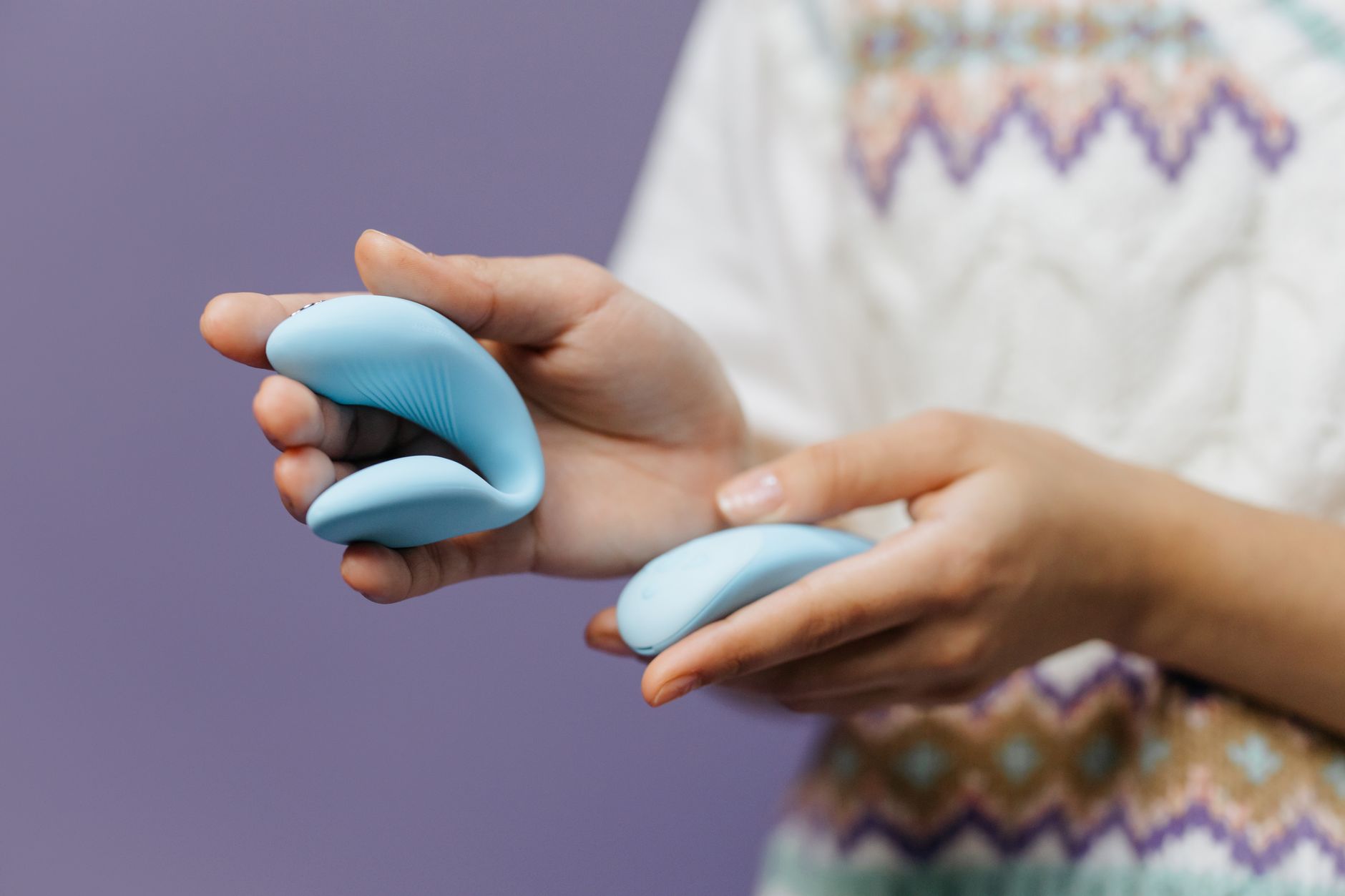
Let them hold it. Seriously. Let them feel how smooth the silicone is, how the weight sits in your hand, how it's about the size of a lemon. Demystification is powerful. It's hard to stay scared of something when it feels like a sleek piece of design in your palm.
Talk about what you've read or learned. "I read that lemon vibrators work really well for building sensation without overstimulation." That framing positions this as education, not rebellion. Your partner might even start asking questions.
The permission conversation
Some partners need explicit permission to accept this.
Say: "I'm choosing this for me. You don't have to participate if you don't want to. But I'd love it if you would. And if you want to start by just being in the room while I explore it, that's enough."
That removes the pressure. They're not being forced into participation. They're being invited. There's a huge difference.
If your partner is willing to try but nervous, go slower than you normally would. How to Use a Lemon Vibrator When Your Partner Wants to Participate but Feels Awkward walks through this specific scenario with more tactical detail.
What actually changes when you introduce a lemon vibrator
Here's the thing nobody tells you: using a lemon clitoral vibrator together often brings couples closer, not creates distance.
When you stop performing for your partner and start being present in your own pleasure, something shifts. They get to witness your real response, not a managed version of it. That's vulnerable and intimate in a completely different way than traditional sex. Some partners find that they like the lemon vibrator more than they expected, specifically because it means you're not chasing orgasm and getting frustrated.
You might also discover that you enjoy yourself more during penetrative sex when you're already partially satisfied. Less pressure means more actual sensation.
If they still say no
Some partners will stay hesitant, even after a good conversation. That's a boundary you get to respect. But also a boundary worth examining.
If your partner refuses to even discuss lemon vibrators or sex toys in any form, that's worth unpacking with a couples therapist. It often signals a bigger intimacy block that's bigger than the toy itself. How to Use Lemon Vibrators With Partners When Communication Feels Difficult explores what to do when the conversation itself breaks down.
You can also choose to use a toy solo, with their knowledge but not their participation. Your solo pleasure doesn't require their approval. They're allowed to feel weird about it. You're allowed to do it anyway.
The long game
Introducing a lemon vibrator to a hesitant partner is rarely a one-conversation fix. It's a process.
They might resist for months, then casually ask about it. They might say no at first, then change their mind after you've used one solo a few times and they see how much you enjoy it. They might always prefer not to participate but become comfortable with you exploring one during solo time.
All of those are valid outcomes. The goal isn't to convince them to love toys. The goal is to move from "this is shameful and off-limits" to "this is part of my pleasure and you're okay with it."
That shift usually takes patience, clarity, and a willingness to separate your desire from their comfort level. You're not asking for permission. You're inviting them into understanding.
People also ask
What if my partner thinks a lemon vibrator means I'm bored with them?
That's the most common fear, and it deserves a direct answer. Say this: "A vibrator is a tool for sensation, like a pillow or lube. It's not a replacement. I want to use this WITH you in the room, so you can see I'm more relaxed and feeling more. That benefits both of us." Sometimes partners need to experience it to believe it. Once they see you more present and less frustrated, the fear often dissolves.
Can I use a lemon clitoral vibrator without my partner knowing?
Yes. Your body is yours. That said, hiding something from a partner usually creates more tension than honesty. If your partner is hesitant but you decide to explore one solo, it's worth mentioning: "I'm going to use this by myself sometimes. I wanted you to know rather than wonder." That's respectful without asking permission.
How long should I wait before bringing up lemon vibrators again if they say no?
Wait at least a month. Let them sit with the idea. Don't mention it during that time. When you do bring it up again, frame it differently. "I've been thinking about what you said. I understand the concern. I'd still love to talk through it." Often, the second or third conversation goes much better than the first.
What if we're in a new relationship and they haven't even met me yet?
New relationships are trickier. I'd wait until you're comfortable with each other sexually before introducing toys. Usually that's a few months in. Then frame it as exploration, not a staple. "I like to use a lemon vibrator sometimes. Would you be open to seeing how that works?" Giving them early notice is actually a green flag. It shows you're not hiding anything.
Is there a difference between a lemon vibrator and other toys I could introduce first?
Lemon vibrators are actually easier to introduce than many toys because they work differently. They use gentle suction instead of aggressive vibration, which feels less intimidating to partners. If your partner is hesitant about ANY toy, a lemon clitoral vibrator is a good bridge because it feels less clinical and more sensual.
What if my partner is okay with toys but doesn't want to watch or be involved?
Perfect. That's a totally valid boundary. Use it solo, with their knowledge. Some partners warm up to participation over time. Some never do. Both are okay. As long as you're not hiding it, you're building trust even if they're not directly involved.
The bottom line
Your hesitant partner isn't the problem. The conversation you haven't had yet is the problem. Once you move from "I want a toy" to "I want my pleasure to matter and I want you to be part of that," things usually shift. Not always quickly. But usually.
A lemon vibrator isn't a threat to your relationship. Resentment about not being able to explore your own pleasure is. That's worth protecting. That's worth the conversation.