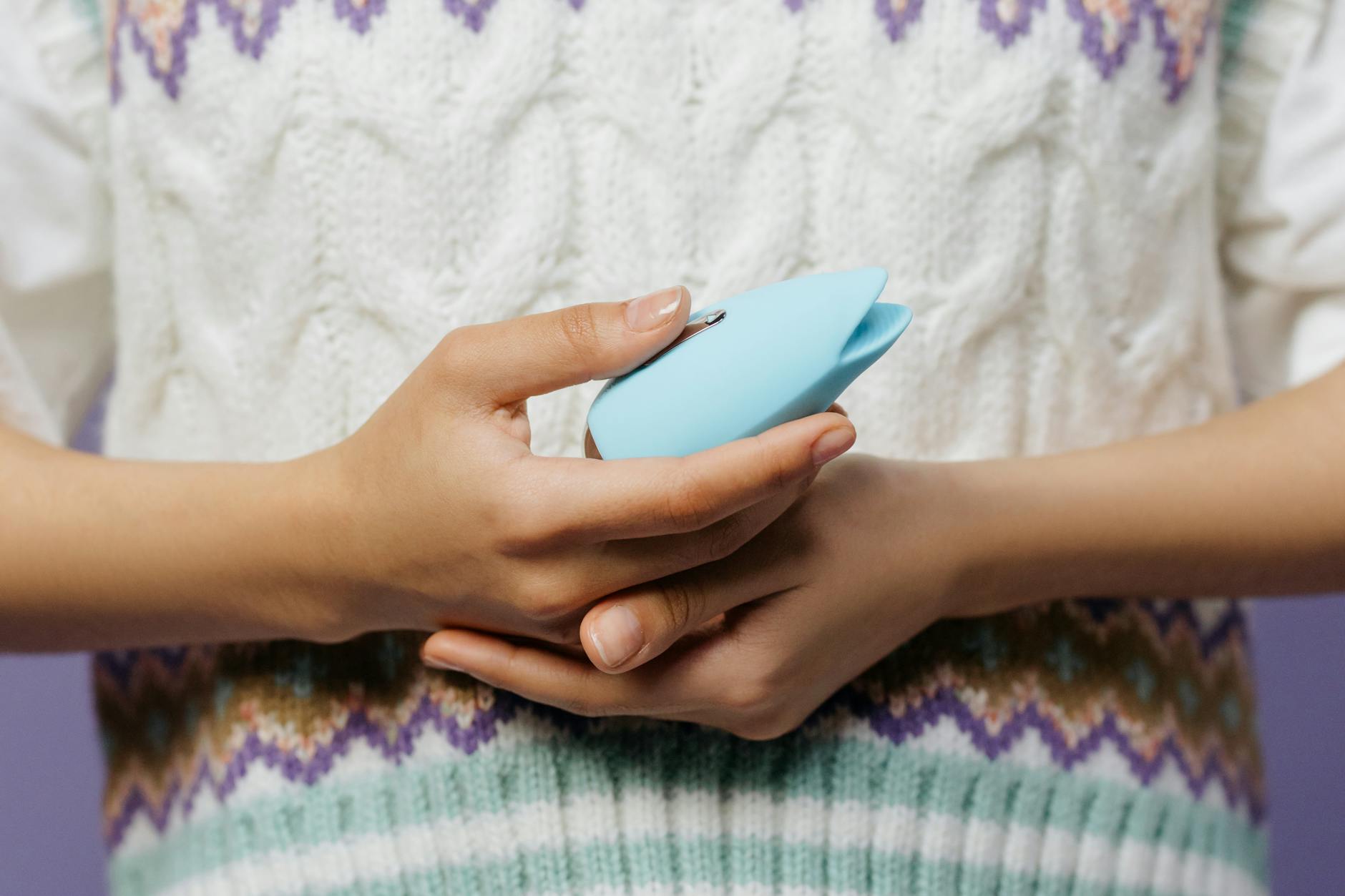
Let's start here: your partner wanting to be involved is the opposite of a problem. It means they care about your pleasure and want to be part of it. The awkwardness isn't a red flag. It's just friction before connection, and friction is fixable.
Here's what I see in my practice all the time. One partner brings home a lemon clitoral vibrator. The other partner gets it, gets that it's not about rejection, but then freezes. They don't know if they should hold it, guide it, watch, leave the room. So they hang back. And then both people feel disconnected, which defeats the whole point.
Don't introduce the vibrator during sex when you're already aroused and vulnerable. That's backwards. Have this conversation fully clothed, maybe over coffee or a glass of wine, when you can both think clearly and laugh if it gets weird.
Here's what to say: "I want to try this together. I'm curious what it feels like. Would you want to be involved in that?" That's it. You're not asking permission. You're inviting participation. Big difference.
Then listen. Your partner might say yes immediately. They might say "I don't know how." They might ask questions. All of that is good. Awkwardness often lives in the space where someone wants to help but doesn't know what helping looks like.
Option 1: They hold it. This is the simplest entry point. You guide their hand to where you want the lemon vibrator. You tell them when to press harder, when to move it, what speed feels good. They're not figuring it out solo. You're teaching them in real time. This is intimate and takes the pressure off them to guess.
Option 2: They watch and you hold it. Sometimes the awkwardness isn't about not wanting to touch. It's about not knowing where to look. Tell them explicitly: "Watch my face. Watch my body." This removes the guesswork. They're not fumbling with a toy they don't understand. They're just paying attention to you, which is half the pleasure for many people.
Option 3: They do something else while you use it. This might sound disconnected, but it isn't. They could touch you in other ways. Kiss your neck. Use their fingers elsewhere. The lemon clitoral vibrator is handling one job. They're handling another. You're still fully connected, just in parallel.
Make a plan before you start. Seriously. "I'll start with the vibrator on low while you touch my breast." Or "I want you to hold it at this angle while I'm on my side." You're not killing spontaneity. You're removing the anxiety that kills it.
Start clothed if that helps. No, really. Some couples ease into it by testing the angle and pressure while still wearing underwear. This removes some of the pressure and lets both of you get comfortable with the mechanics without the intensity of full nakedness and arousal yet.
When you do move into skin contact, go slow. Let them hold the vibrator for 30 seconds. See how it feels. Adjust together. If they're gripping it too tight or holding it at an angle that doesn't work, show them. Guide their hand. "Lighter pressure here. Yes, like that." Feedback is your friend.
There's a particular kind of weirdness that comes up: your partner worries they're not enough. That you need the vibrator because they're failing somehow. This is so common, and it's also completely wrong, but your partner won't believe that unless you tell them directly.
Say this: "This isn't about you being not enough. This is about adding something that feels good. I want to experience this with you." Then actually mean it. Because if you're using the lemon vibrator as a substitute for connection rather than an expansion of it, they'll sense that immediately.
Another awkwardness: they worry about doing it wrong. Remind them there is no wrong. The vibrator either feels good or it doesn't. If it doesn't, you adjust. You're not being tested. Neither are they.
Position matters more than you think. If you're lying on your back and they're trying to hold a toy at an angle from the side, everyone gets uncomfortable and the moment gets clinical.
Try this instead: you're on your back, they're beside you propped on an elbow. The angle is easier. Or you're on your side and they're behind you. Or you're sitting and they're kneeling in front. The goal is that both of your bodies are relatively comfortable so blood flow stays in the right places and nobody's arm is falling asleep.
Once your partner relaxes into it, something shifts. They start noticing your responses. They learn that a certain pressure or speed makes you arch your back. They see how different parts of your body react. Many people tell me this is when it becomes genuinely intimate, because they're learning your pleasure map in a way they couldn't before.
This is also when the lemon vibrator becomes a tool for them to deepen connection rather than a source of anxiety. They're using it with you, not replacing themselves with it.
Some partners even develop a kind of rhythm where they'll use the vibrator, then their hands, then the vibrator again. They're actually playing with you, not just operating a machine. When that happens, the awkwardness is completely gone.
Sometimes awkwardness persists, and that's worth taking seriously. Not every person is comfortable with every aspect of sex, and forcing it creates resentment.
If your partner stays uncomfortable, you have a few choices. They can opt out, which is fine. Your pleasure doesn't require their participation. Or they can find a middle ground. Maybe they're fine with it as long as they're not the one holding it. Maybe they'd rather not watch but are fine with you using it during sex.
If the discomfort is rooted in something deeper, like shame around sexuality or feeling insecure, that might be worth exploring together in therapy. A skilled couples therapist can help both of you understand where the awkwardness is coming from and whether it's something to work through or work around.
Once you've used a lemon clitoral vibrator together for the first time, check in afterwards. Not in a clinical way. Just: "How was that for you?" Let them tell you what felt good. Ask them what they noticed. Make space for them to say it felt weird or they felt shy. That honesty is what turns it from a one-time experiment into something you can actually build on.
Your partner's willingness to try something outside their comfort zone matters. So does telling them you noticed, that you appreciated it, that it made a difference to your experience.
This is the fear underneath most of the awkwardness. Address it directly. A lemon clitoral vibrator isn't a referendum on your partner's abilities. It's an addition, not a replacement. You might say: "I love sex with you. I also want to explore what else feels good. I want you to explore it with me."
Absolutely. Some partners get curious and want their own experience with the toy. If you're comfortable with that, it's actually a lovely expansion. It removes the pressure that this is only about you and opens it up to mutual exploration.
That's practical awkwardness, not emotional. Just handle it: warm water, soap, maybe a dedicated washcloth. Most people care way less about logistics once they see it's genuinely simple. You can also get silicone-specific cleaner if that makes it feel more official.
Yes, actually. Even if they're not the one using it, picking it out together removes some of the mystery and makes it feel less like something you're imposing. They might pick a color they find less clinical looking. They might prefer one with quieter motor. That participation matters.
Great. Seriously. Some partners discover they actually really enjoy helping facilitate their partner's pleasure. It gives them a role that feels intimate and generative. You're not competing. You're both winning.
You don't, unless you ask. And you can't take one yes as a permanent yes either. Check in regularly. "Are you still comfortable with this? Do you want to try something different?" Consent isn't a one-time conversation. It's ongoing.
When you're using a Hello Nancy lemon vibrator with a partner, you're essentially saying: "I trust you with my pleasure." That's significant. And your partner showing up, even awkwardly at first, is them saying yes to that trust.
The awkwardness fades faster when both people understand that the toy isn't the point. Connection is. The vibrator just makes one kind of connection easier to access. Everything else is up to you.
Some couples find that introducing a clitoral vibrator into partnered sex actually deepens intimacy because it forces a conversation about pleasure that might not have happened otherwise. You have to talk about what feels good. You have to pay attention. You have to stay present.
If your partner's hesitation is more significant, or if you're both struggling to communicate about this, talking with a couples counselor can help you navigate not just the vibrator, but the dynamic underneath. Either way, the fact that your partner wants to participate is the exact opening you need. Start there.