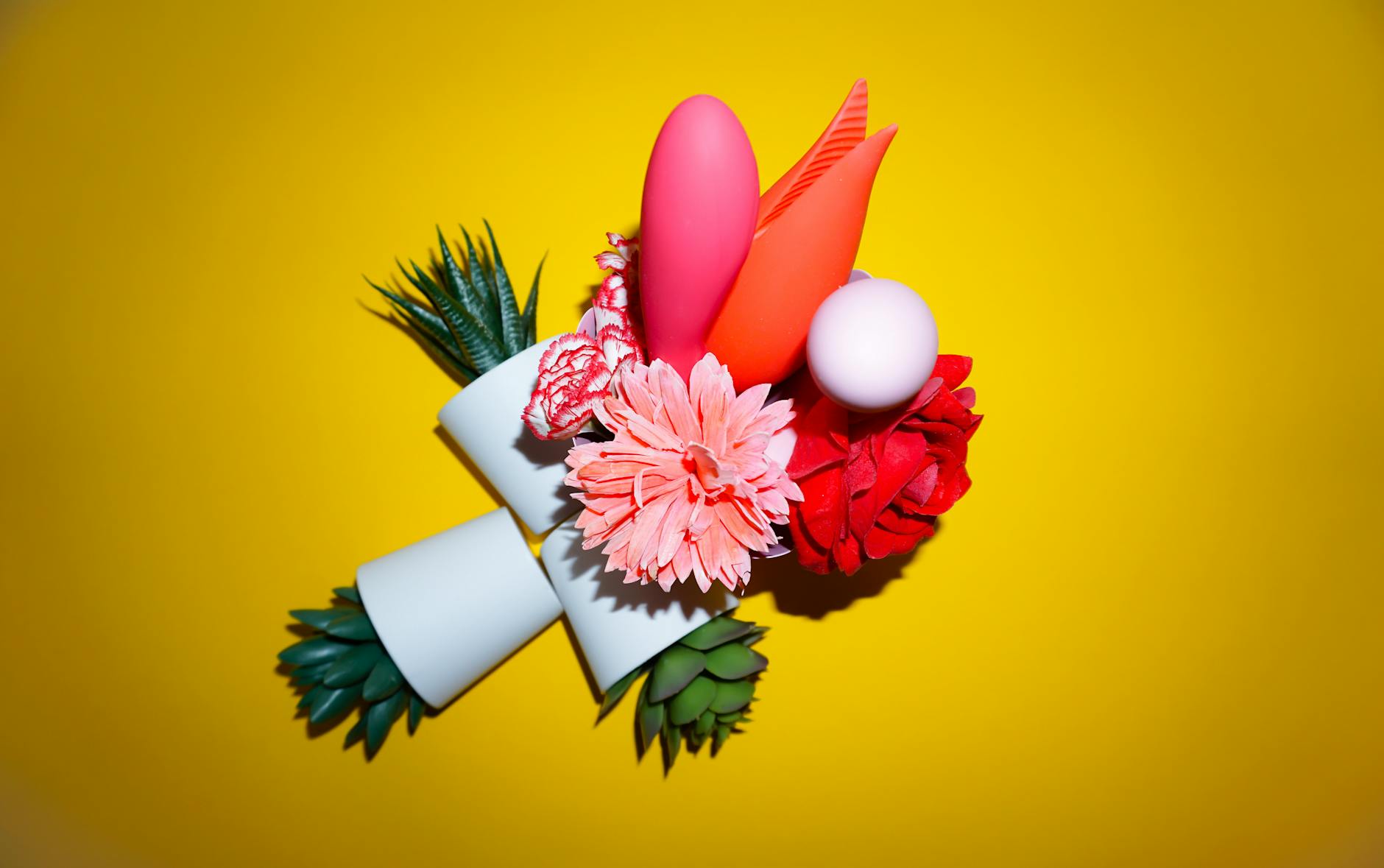
Let's talk about the weirdness
After a divorce or long-term breakup, touching yourself feels different. Not wrong, not broken, just different. Your body has spent years (maybe decades) in a paired nervous system. You've been wired for someone else's touch, someone else's rhythm, someone else's presence. Even if the sex was mediocre or the relationship was painful, your body learned to expect another person. Now there's just you. And that mismatch between what your nervous system expects and what's actually there can make everything feel stilted, performative, or even a little bit sad.
This is normal. It's also entirely fixable. But first, we need to look at what's actually happening.
The nervous system reset that nobody mentions
Your body has a relational baseline. During a partnership, your arousal system calibrates to another person's touch, presence, and predictability. Your pelvic floor learns specific tension patterns. Your breathing synchs to someone else's. Your brain releases oxytocin in response to physical contact and emotional safety from that particular partner.
When that partnership ends, your nervous system doesn't instantly recalibrate. It's looking for the familiar stimulus. When you're alone with a vibrator, your brain registers the absence of the other person's breath, heartbeat, voice, and attention. That absence hits different, especially early on.
Here's what gets better with time and intentional practice: your nervous system can learn to find arousal in solo pleasure. It's not automatic. It's a skill.
Why lemon clitoral vibrators help specifically
A lemon vibrator works well post-breakup for a few concrete reasons.
First, suction-based stimulation (which the Hello Nancy Lemon delivers) doesn't require the kind of partner-facing positioning that traditional vibrators do. You're not lying on your back waiting for someone to show up. You're not in a posture that was designed for two people. You're in whatever position feels best for you, which sounds simple but matters enormously for rebuilding a solo nervous system.
Second, suction engages the clitoral complex in a way that feels significantly different from penetration or partner touch. It's new to your body in most cases, which means your nervous system isn't comparing it to "partner sex." You're not hunting for the sensation your ex provided. You're learning something fresh.
Third, lemon suction vibrators often deliver consistent, predictable stimulation without requiring active thrusting or angle-adjusting. After a breakup, your brain is already working overtime processing loss. Taking the decision-making out of pleasure helps. You can focus on sensation instead of logistics.
The guilt that arrives uninvited
Here's something nobody prepares you for: pleasure can feel like a betrayal. You might feel disloyal to the relationship (even if it ended badly). Or you might feel like you're "moving on too fast." Or you might feel performative, like you're forcing yourself to be fine when you're actually grieving.
That guilt is not a signal that you should stop. It's a signal that your nervous system is still oriented toward the partnership, even though the partnership is gone. Guilt is grief in a tuxedo.
What actually helps: patience with yourself. Don't shame the guilt. Don't push past it by white-knuckling into pleasure. Instead, sit with it for a few minutes. Acknowledge it. Then, when you're ready, use a lemon vibrator (or nothing at all) as a way to practice self-soothing rather than self-punishment.
Rebuilding from the ground up
If solo pleasure feels genuinely inaccessible right now, here's a reframe: you're not broken. You're recalibrating. These are the steps I recommend.
Week one to two: permission without pressure. Use a lemon vibrator with absolutely no expectation of orgasm. The goal is sensation, not outcome. Two to five minutes. Pattern one or two, lowest intensity. You're introducing your nervous system to the idea that your own touch can be good.
Week three to four: exploration. Now you can experiment with intensity and patterns. Notice what your body actually wants instead of what you think you should want. The lemon's suction-based design means you can dial in the exact sensation. Pay attention.
Week five onward: integration. Once pleasure starts feeling less foreign, you can use it as an actual pleasure practice rather than a nervous system retraining exercise. The shift from "I'm supposed to do this" to "I want to do this" is when you know the reset is working.
The emotional layer you can't skip
Physical pleasure and emotional processing are not separate systems. You can't outrun grief with an orgasm. But you can move through grief with a little more ease if you're not also carrying the burden of "I should be fine now."
If you're using a lemon vibrator and you find yourself crying instead of coming, that's not a malfunction. That's your body releasing something. Let it. Some of the most important solo pleasure sessions I've seen clients navigate have been the quiet, tearful ones where the outcome was permission to feel the breakup, not sexual satisfaction.
How Lemon Vibrators Help Rebuild Intimacy After Major Life Transitions covers this intersection more directly.
The timeline is personal
Someone will tell you that you "should" be ready to date again after six months, or a year, or whatever. Ignore that person. The timeline for rebuilding solo pleasure is individual. Some people come back to it within weeks. Others take a year or more. Neither is wrong.
What matters is that when you do return to pleasure, you're doing it for yourself, not because you think you're supposed to be "over it." A lemon vibrator can be part of that process, but only if you use it as a tool for self-discovery rather than a metric for healing.
Photo by SHVETS production on Pexels
When you're ready to try again
If you've been without partnership pleasure for a while and you're curious about easing back in, a lemon clitoral vibrator is genuinely one of the gentler entry points. The sensation is distinct enough that your nervous system isn't comparing it to partner touch. The suction design means you can customize intensity without overthinking mechanics.
Start solo. Spend a few weeks getting reacquainted with your own pleasure before bringing anyone else into the picture. This isn't about being scared. It's about establishing a baseline of "this is what I like" before you have to accommodate someone else's preferences again.
The practical setup
Three things that help the reset process.
First, create a dedicated time and space. Not sneaking a few minutes in the bathroom. A bedroom, a lock, twenty uninterrupted minutes. Your nervous system needs to know this is intentional, not stolen. Second, use a good water-based lubricant even if you don't think you need it. After a breakup, arousal can take longer to build. Lubrication isn't a sign of dysfunction; it's support. Third, let go of the orgasm goal for the first few weeks. I know that's counterintuitive. But your nervous system is already stressed from the breakup. Removing the performance metric helps.
The bigger picture
After a long partnership, solo pleasure isn't just about sensation. It's about reclaiming your own nervous system. It's about learning that your body can feel good without an external person validating that goodness. It's about rebuilding the bridge between what you want and what you do, which often gets frayed during long relationships.
A lemon vibrator won't fix the breakup. It won't erase the grief or the loneliness. But it can help you remember that pleasure is yours to access, that your body is still capable of it, and that you're allowed to explore it on your own timeline. That matters more than you might think.
FAQ
Why does touching myself feel weird after a breakup?
Your nervous system has spent years calibrated to another person's touch and presence. When that stimulus disappears, solo pleasure feels unfamiliar because your brain is searching for the relational context it expected. This is temporary and normal.
Is using a lemon vibrator too soon after a breakup?
There's no "too soon." If it feels right, it's right. If it feels wrong or brings up grief, that's information too. Use a lemon vibrator when you're genuinely curious, not because you think you should be over it by now.
Why does the suction of a lemon clitoral vibrator feel different than traditional vibration?
Suction engages the clitoral complex differently than vibration alone. It creates a seal and rhythmic pressure that many people find more targeted and less overwhelming. After a breakup, this distinct sensation can help your nervous system learn new pleasure pathways instead of comparing everything to partner touch.
Should I expect an orgasm the first time?
No. Early on, the goal is sensation and nervous system recalibration, not outcome. Orgasms often come more easily once pleasure stops feeling performative. If you approach it with curiosity instead of pressure, the rest usually follows naturally.
Can I use a lemon vibrator if I'm still grieving the relationship?
Yes. Grief and pleasure aren't mutually exclusive. Some solo pleasure sessions will be about reconnecting with sensation. Others might bring up sadness or loss. Both are useful. Your body processes what it needs to process.
How long does it take to feel "normal" about solo pleasure again?
It varies widely. Some people feel back to baseline within weeks. Others take several months. The timeline depends on the length of the relationship, how it ended, and your personal healing pace. Patience with yourself matters more than speed.
Next steps
If you're exploring this alone and you want more specifics about technique or what to expect, check out our buying guide or reach out at /contact with any questions. You're not broken. Your nervous system is just recalibrating. That takes time, permission, and patience with yourself.