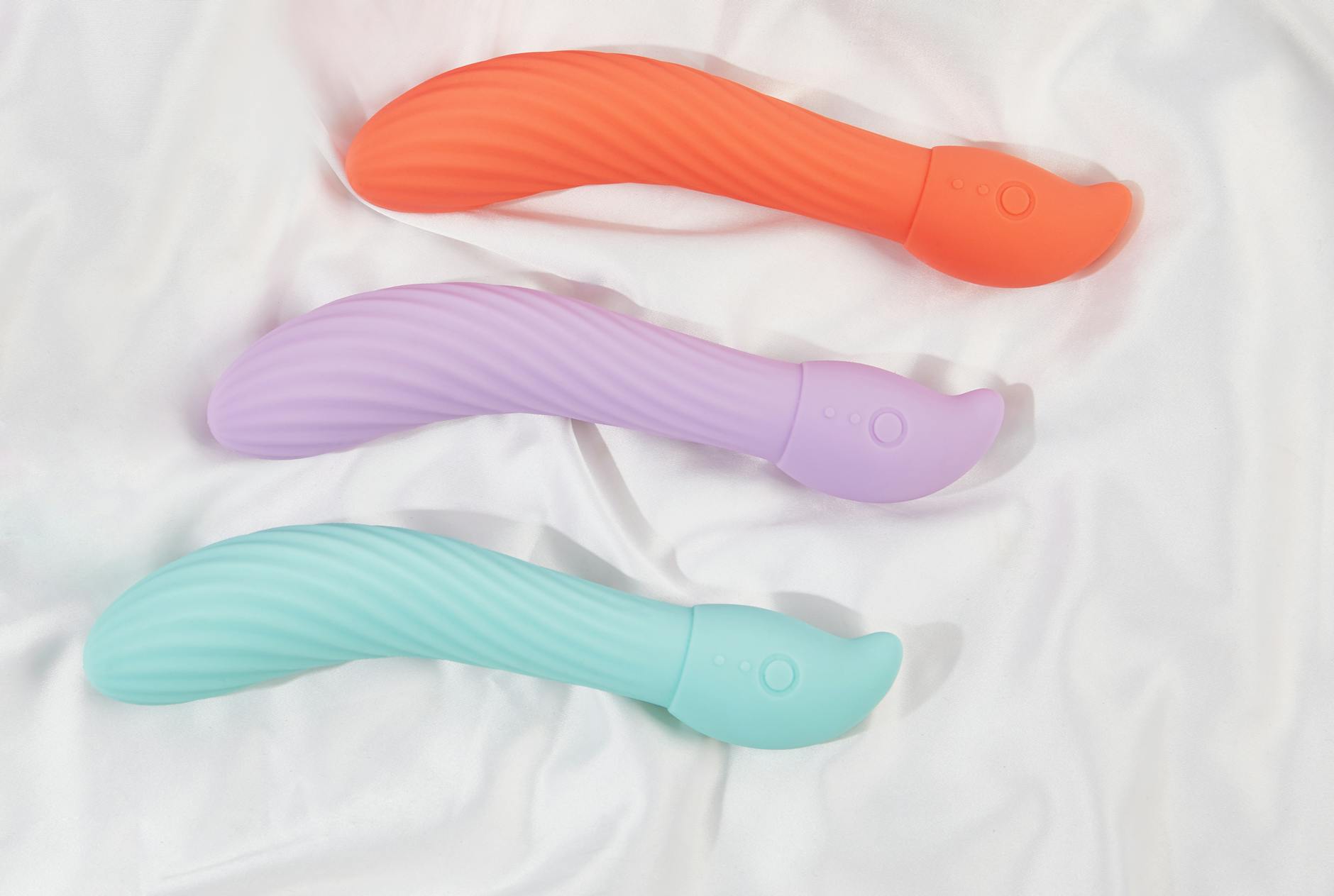
How to Use a Lemon Vibrator With a Partner When Anxiety Gets in the Way
Let's be real. The moment you think about bringing a vibrator into the bedroom with a partner, something happens in your chest. A tightness. A question you can't quite name. "Will they think I don't want them anymore?" Or maybe the opposite worry: "Will they think I'm too much?" Or the deepest one: "What if it ruins what we already have?"
I've heard this fear from hundreds of people in my therapy practice. And almost none of it is actually about the vibrator. It's about vulnerability. It's about the fear that wanting something for your body means you're rejecting your partner, or that needing external tools means you're broken. The anxiety isn't about the lemon clitoral vibrator itself. It's about what you think introducing one says about you, about them, about the relationship.
Here's what I know: couples who can talk about sex without shame have better sex and better relationships overall. And the conversation usually starts when one person is brave enough to say, "I want to try something." That's the real moment. Everything else follows.
The anxiety that shows up before you even mention it
Most of the time, the biggest barrier isn't your partner's reaction. It's your own internal voice. You're already convinced they'll say no, or judge you, or get defensive. So you don't even try.
This is called "protective pessimism." Your brain is trying to protect you from rejection by rejecting yourself first. It feels safe, but it keeps you isolated. And it keeps your partner locked out of knowing you.
Here's what I want you to notice: you're having an entire conflict in your head with your partner before they've said anything. They don't even know they're supposed to be defensive yet.
So the first step isn't buying a lemon vibrator or crafting the perfect conversation. The first step is asking yourself one honest question: "What am I actually afraid of?" Not the surface answer. The real one. Are you worried they'll feel inadequate? That you'll feel rejected if they say no? That you're admitting something is missing? Sit with that for a moment.
Why your partner probably won't react the way you think
Most partners, when you bring this up carefully and honestly, are relieved. Not because they secretly wanted this, necessarily, but because you just opened a door that's been closed. You said, "I want pleasure. I want us to explore together." Those are statements of trust, not rejection.
The partners who do react poorly tend to have their own anxiety underneath. Maybe they were taught that needing a vibrator means something is wrong. Maybe they're insecure about their own capabilities. Maybe they were raised in an environment where sex was shameful or transactional. None of that is about you. And none of it means the conversation didn't need to happen.
In fact, if your partner reacts with defensiveness or judgment, that's valuable information. It tells you something about what needs to be talked through between you. And that's relationship work that matters more than the vibrator itself.
How to actually start the conversation
Honestly, context matters more than script. But here are three approaches that work in my experience, ranked by anxiety level.
The casual segue (lowest barrier): "I've been reading about different ways we could explore more, and I'm curious about trying something together. Would you be open to that?" This is open-ended, non-accusatory, and frames it as joint exploration.
The direct vulnerability (medium barrier): "I've been a little anxious about this, but I want to try using a vibrator together. I'm not saying anything is missing. I just want to explore what feels good for me, and I'd love you there." Naming your anxiety actually lowers their defensiveness. It signals safety.
The external prompt (highest barrier but sometimes easiest): "I read this article and it got me thinking..." or "This came up in something I was listening to..." Sometimes blaming a third party takes pressure off both of you. It's less about your relationship in isolation and more about something you're both curious about now.
The worst approach? "We need to talk." That kind of opening triggers defensiveness immediately because it sounds like there's a problem to solve, not pleasure to explore.
What to do with the anxiety after they say yes
Okay, so they didn't freak out. Now a different anxiety shows up. The performance anxiety. The body anxiety. "What if it doesn't work?" "What if I can't orgasm with them watching?" "What if they think I'm weird?"
This is actually where using a lemon clitoral vibrator together becomes a skill you build, not a thing you do once.
Start with something low-stakes. Not the most intense experience you can imagine. Maybe you use it on your own while they're in the room, without direct involvement. Maybe you use it as foreplay before intercourse. Maybe you explore settings and sensations together before either of you is trying to come.
The first time doesn't need to be a big production. It needs to be a conversation between your bodies, without pressure. If you're using something like the Lem, which has multiple intensities and patterns, you can literally talk through what feels good. "Try pattern three on me. Okay, now rhythm two." That turns it into collaboration, not performance.
The specific anxiety that shows up during sex
Here's the thing almost nobody warns you about: once the vibrator is actually involved, a new anxiety can spike up. You might find yourself self-conscious about your body, or worried about taking too long, or anxious that your partner is bored watching.
This is the moment where communication becomes less about big conversations and more about micro-check-ins. A hand squeeze. A quiet "you good?" A simple nod back. These tiny reassurances keep anxiety from taking over.
If you notice your anxiety rising during sex, you can pause and ask directly: "Are you enjoying this?" Most people say yes, and there's genuine relief in hearing it. Your brain probably invented a story about them being bored, and the actual answer is different.
Also, here's something that helps: sometimes anxiety during sex is actually just dehydration, or needing to pee, or your neck being in a weird position. Not everything is emotional. Sometimes you just need to shift how you're lying down and suddenly the anxious feeling lifts.
When anxiety is pointing to something real
Not all anxiety is unfounded. Sometimes your nervous system is picking up on something that actually needs attention.
If you feel anxious about intimacy with this particular partner in general, a vibrator isn't the thing to solve first. That's a deeper conversation about safety, trust, and connection. If the anxiety is intense enough that you're having panic or can't be touched, that's a signal to talk to a therapist, not to push through it.
But if the anxiety is specifically about this new thing, about novelty and vulnerability in an otherwise solid relationship, that's normal. That's just your nervous system being cautious about something unfamiliar. And that anxiety usually settles once you've done it a few times and realized nothing bad happened.
The subtle anxiety that lingers
Sometimes even after the vibrator is introduced and it goes well, there's a lingering feeling. Maybe you're worried they only want you to use it now. Maybe you feel a little less adequate. Maybe you're self-conscious about being the one who wanted this.
These feelings need naming, not ignoring. Talk to your partner about the experience afterward. Not in a heavy, serious way. Just casually. "That was fun. How did it feel for you?" This simple exchange does something important. It reminds both of you that you experienced something together. That it wasn't separate or weird. That you're on the same team.
Most couples report that using a vibrator together, once the anxiety passes, actually deepens intimacy. Not because the vibrator is magic. But because you both showed up authentically. You said what you wanted. You let your partner see you wanting something. And they met you there.
That's the real intimacy.
Practical things that actually help the anxiety decrease
Here are the small things that matter more than you'd think:
Start with a toy that feels good in your hand. If you're holding something that feels expensive or intimidating or ugly, the anxiety stays high. A lemon vibrator like the Lem is designed to feel nice to hold and use. That matters more than you realize. The tactile experience calms your nervous system.
Choose a time when you're not already stressed. Not immediately after an argument. Not when you're worried about work. Not when your partner is tired or distracted. The best time is when you're both a little bit relaxed and actually present.
Use lubricant. This sounds basic, but anxious people tend to grip tighter and relax less. Lubricant helps your body respond more easily and takes pressure off performance. It's also a signal to your nervous system that this is meant to feel good, not be achieved.
Keep communication light until you're comfortable. You don't need to do a post-sex debrief every time. Sometimes it's just, "That was nice," and moving on. The pressure to analyze and discuss can actually create more anxiety.
FAQ: What people actually ask about vibrators and anxiety
What if my partner says no?
Then you're back to a real conversation. You can ask why. You can listen. And you can decide if this is a dealbreaker or something you can explore later. Sometimes no means "not now." Sometimes it means "I need more information." And sometimes it means something deeper about your compatibility or their comfort. All of that is useful to know.
Will using a vibrator make me dependent on it?
No. Your body doesn't become reliant on a vibrator the way it does with medication. What might happen is that you learn what feels good and what doesn't. That's not dependence. That's knowledge. And that knowledge makes you a better partner to yourself and anyone else.
What if I can only orgasm with the vibrator, not with my partner?
That's actually not uncommon, especially if you've been anxious or if your nervous system hasn't learned to relax with a partner present. This usually changes over time, especially if you use the vibrator together regularly. But also, "only with the vibrator" is still orgasm. That still counts as pleasure. And it's still valuable.
How do I know if my anxiety is about the vibrator or about my partner?
The vibrator is usually the easier target. If you're anxious about the vibrator specifically, introducing it and having a good experience usually resolves it. If you're anxious about your partner, introducing a vibrator won't fix that. Pay attention to whether the anxiety is about the novelty or about the person. That tells you where the real work is.
Can I use a lemon vibrator alone to practice before using it with my partner?
Absolutely. In fact, this is probably the best thing you can do. Getting comfortable with the toy, learning what settings and rhythms feel good, getting over the awkwardness alone. All of that makes you more relaxed when your partner is involved. And honestly, your partner probably wants you to know what you like before they're trying to figure it out.
What if we start using a vibrator and it actually makes things worse?
If the experience was actively negative or painful or something felt wrong, yes, pause. But if it was just awkward or anticlimactic, that's normal. Most new sexual things are a little awkward the first time. If after a few tries it still doesn't feel right, that's useful information too. You can shelve the vibrator and try something else. Or you can shelve it entirely. Your pleasure isn't about proving anything. It's about what actually feels good to you.
Here's the thing I want you to know: the anxiety you're feeling right now, before you've even started this conversation, is normal. It's also not the boss of you. You can feel anxious and do the thing anyway. In fact, that's what courage actually is. Not the absence of fear. The willingness to be honest despite it.
Your partner probably wants you to have pleasure. Your partner probably wants to know you. And even if they're nervous too, that's something you can figure out together. That's what relationships are actually for. Not to perform perfection. But to show up, to be curious, and to let each other be fully human.
The vibrator is just the tool. The real thing that matters is deciding that your pleasure, and your honesty, are worth the risk of that conversation.
If you want to talk through this with someone, or if the anxiety feels too big to navigate alone, we're here at /contact. Sometimes having a neutral person help you think through the conversation makes the whole thing feel less scary.
You deserve this. And you deserve a partner who meets you there.