Let's name what's actually happening
You're in bed and you're not really there. Part of you is watching yourself, running a mental checklist: Am I taking too long? Should I be more vocal? Is my partner getting frustrated? The pleasure that should be building instead gets replaced by a quiet, exhausting performance anxiety.
This is not about your body. It's about the story you've learned to tell yourself during sex: that your pleasure is something you're doing for someone else, not for you.
How partner pressure rewires your pleasure response
When sex carries unspoken expectations, your nervous system shifts into a subtle surveillance mode. You're no longer in parasympathetic arousal (rest, digest, connect). You're in sympathetic activation (fight, flight, watch yourself). That's not a mood problem. That's a neurological one.
The irony is that most partners don't actually want you performing. They want you present. But over time, if you've received the message that your pleasure should happen faster, look a certain way, or align with their timeline, you internalize it. Your body learns not to trust its own pace.
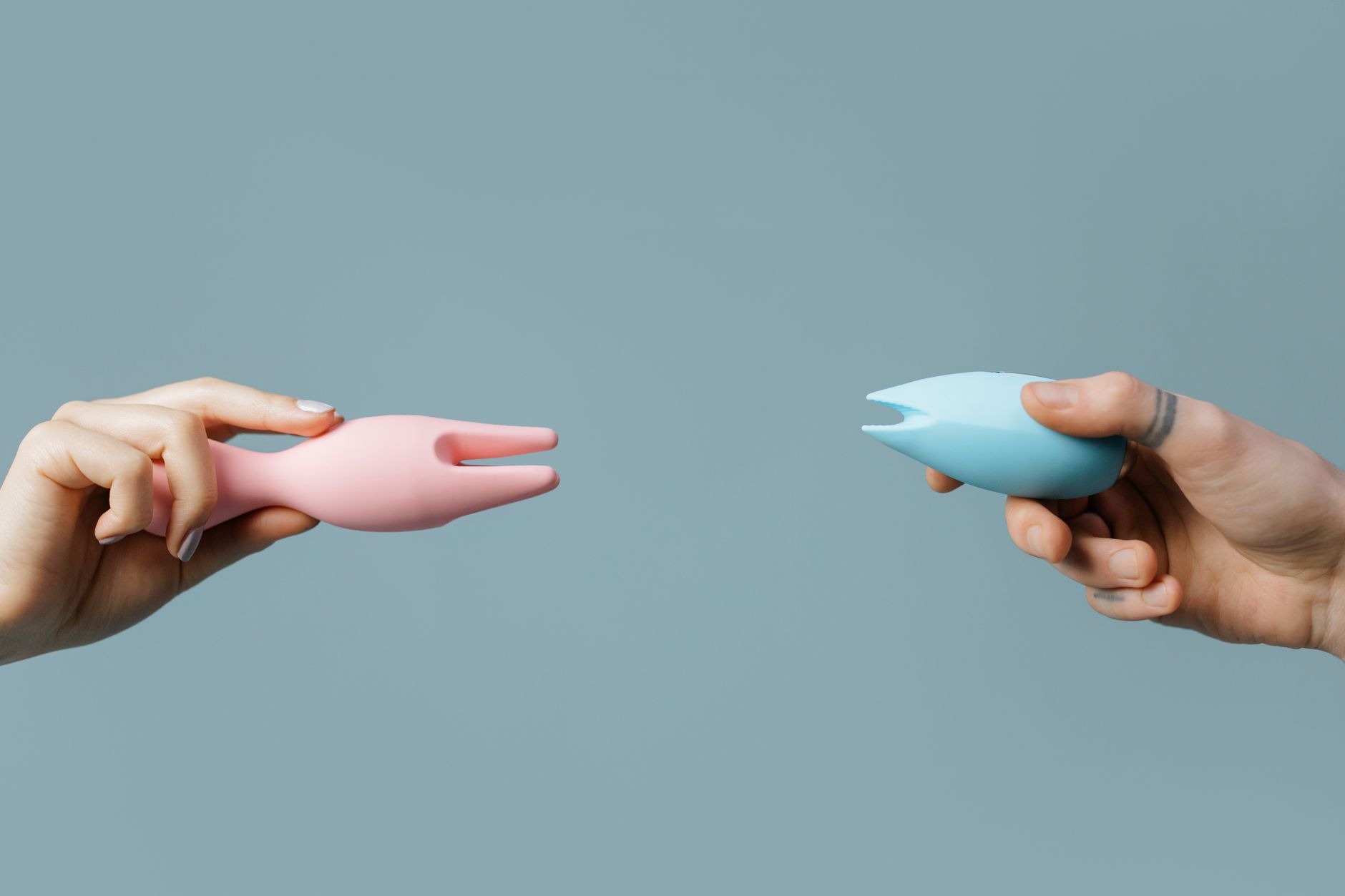
This is why a lemon clitoral vibrator can shift something fundamental. It's not magic. It's permission in a physical form.
The suction pattern changes the power dynamic
Traditional vibrators often require your active participation in a recognizable way. You're guiding it, positioning it, maintaining rhythm. With someone watching or waiting, that visibility itself becomes part of the pressure.
Lem vibrators and other lemon sucker toys work differently. The suction pattern (the air-pulse technology that makes clitoral vibrators like this so effective) does something your conscious mind can't easily interrupt: it creates a sensation that bypasses your performance anxiety because it's not something you're generating. You're receiving it.
That distinction matters. When you're not managing the stimulation, you can't simultaneously manage the story you're telling yourself about being watched.
How to set this up without the awkwardness
First, separate the logistics from the emotional work. Tell your partner you want to explore something that helps you get out of your head during sex. You don't need to therapize it in the moment. "I'm trying something that helps me stay present" is complete.
Then, practically:
Start with your partner present but not touching. You control the lemon vibrator, you set the pace, you decide when to stop. The key is that your pleasure is not their job to manage. This takes pressure off both of you.
Use water-based lubricant. The suction works better with a seal, and lubrication means less friction for your vulva, which matters when you're already tense. Tension restricts blood flow. Blood flow is arousal.
Warm up longer than you think you need to. When you're in performance mode, you skip the buildup. Your body hasn't actually registered that sex is happening. Give yourself 10-15 minutes of solo exploration with the lemon clitoral vibrator before your partner engages. This is not foreplay. This is you remembering what pleasure feels like when it's not tied to someone else's timeline.
Start on a lower pattern. If you jump to high intensity, you're still performing (proving you want this enough). Lower patterns give you time to notice what you're actually feeling instead of what you think you should be feeling.
The conversation that needs to happen, but not during sex
If the pressure is coming from a partner's direct communication (rushing you, expressing frustration, comparing you to past experiences), that's a separate problem that a lemon vibrator can't fix. That's a boundary and consent issue.
But if the pressure is coming from your own internalized story about what sex should look like, you can rewire that. Here's how: talk to your partner outside the bedroom about what's true.
"When I'm in my head during sex, I disconnect. I need us to slow down and check in if I go quiet." "I sometimes feel rushed and it makes me tense. Can we agree that if I ask to pause, we pause?" "I'm working on trusting my own pace instead of guessing what you want."
Most partners will respond to this with relief. They'd rather know what's happening than wonder if you're enjoying yourself.
Why this matters for long-term desire
Every time you perform instead of feel, you're training your body that sex is not a safe place to be selfish about pleasure. And you need to be selfish about pleasure. Not cruel. Selfish. Your orgasm belongs to you.
When you reclaim that, something shifts in your relationship too. You stop resenting your partner for not reading your mind. You stop feeling obligated to fake enthusiasm. You show up as someone who actually wants to be there, not someone proving they do.
A lemon vibrator or lem clitoral vibrator isn't about the toy. It's about the permission the toy represents: that your pleasure is worth protecting from performance anxiety.
The practical rhythm that works
Here's what I recommend to couples navigating this:
Week 1-2. Use your lemon sexual toy alone. No one watching. No timeline. Just you figuring out what sensation actually feels good, not what you think should feel good.
Week 3. Your partner can be in the room but engaged in their own thing. Reading, listening to music, whatever. Their presence without their attention.
Week 4. Introduce them into the experience. They can touch you elsewhere, watch, be close. But your pleasure with the clitoral vibrator stays under your control.
Week 5+. Integrate it into partnered sex if you want. But keep the non-negotiable boundary: when you're using it, the pace is yours.
When pressure turns into something else
If you notice that even alone with a lemon adult toy, you're still performing (rushing through, not allowing yourself to feel, disconnecting), that's worth paying attention to. Sometimes the pressure comes from deeper places: shame, past experiences, relationship dynamics that need external support.
A lemon sucker vibrator is a tool, not a therapist. If pleasure feels dangerous or wrong even in isolation, talking to someone (a therapist, a coach, even a trusted friend) matters more than any toy.
People also ask
Why does partner pressure make orgasms harder to achieve?
When you're watching yourself instead of experiencing yourself, your nervous system is in a protective mode. Blood flow concentrates in your brain (monitoring, evaluating) instead of in your genitals (arousal, sensation). Orgasm requires blood flow and relaxation. Performance anxiety creates the opposite state. A lemon clitoral vibrator can help because it gives you something external to focus on, which can interrupt the self-monitoring loop.
Can a lem vibrator help if my partner is unsupportive about toys?
Not entirely. If your partner is actively hostile to toys or dismissive of your pleasure, that's a relationship dynamic issue that goes beyond what any lemon vibrator can address. That said, many partners come around when they realize the toy isn't replacing them. It's protecting the person they care about from performance anxiety. Starting the conversation outside the bedroom, and keeping the first experience solo, often helps.
How long does it take to stop performing and start feeling?
It depends on how long you've been in performance mode. If it's been months or years, rewiring takes time. But most people notice a shift within 2-3 weeks of consistent solo exploration with a lemon sexual toy. You start to remember what genuine arousal feels like. Once you know that feeling, you can recognize when you've drifted back into performance mode and gently correct course.
Should I tell my partner I'm using a lemon vibrator to address performance anxiety?
Not if you don't want to. Your solo pleasure practice is yours. That said, most long-term relationships benefit from some version of "I've been working on being more present in bed and I want to share that with you." You don't need to say "performance anxiety." You can say "I wanted to explore what actually feels good to me." The honesty matters more than the clinical language.
Can I use a lemon clitoral vibrator with my partner watching?
Yes, but timing matters. Once you've spent a few weeks with your own pace and your own pleasure, having a partner present can be hot because you're not performing for them. You're confident enough in your own sensation that their attention becomes part of the eroticism instead of part of the pressure. That's a completely different dynamic than performing anxiety.
What if my partner wants to use the lemon vibrator on me?
That's fine if you want it. The key is that you stay in control of when, how, and how long. You can guide their hand, ask them to adjust intensity, or ask them to pause. Your pleasure still belongs to you. They're just participating in it.
The shift that matters
Sex isn't a test you're trying to pass. It's not a performance you're trying to nail. It's a place where your body gets to be selfish, present, and believed.
A lemon vibrator or clitoral vibrator can help you remember that. Not because it's magic, but because it's permission made physical. Permission to feel what you feel, at the pace that works for you, without an audience in your head.
That permission is worth protecting. For your pleasure, and for your relationship.