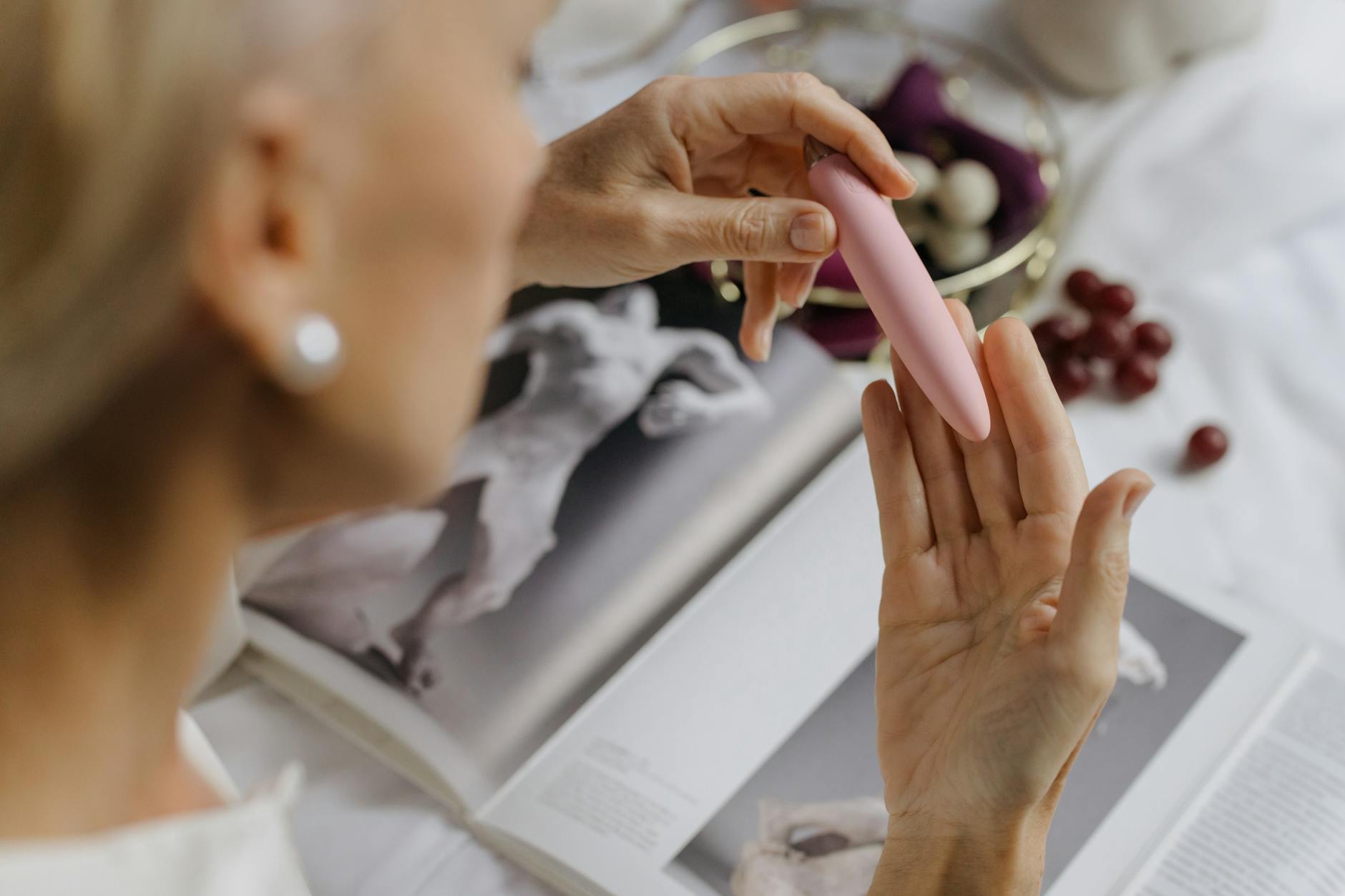
Let's name what's actually happening
Natural lubrication decreases with age. This is biological fact, not a personal failing. Estrogen drops (whether from natural aging, medication, or medical transition), and tissues produce less fluid. The vaginal opening gets less plump. Everything feels a little drier.
Here's what doesn't happen: your capacity for pleasure doesn't drop. Your nerve endings don't disappear. Your ability to orgasm doesn't vanish. What changes is the mechanical setup. And that's actually fixable.
Why decreased lubrication feels so different
Lubrication does three jobs. First, it protects delicate tissue from friction. Second, it creates the slickness that makes stimulation feel easy and pleasurable. Third, it changes how vibration travels through tissue. Less lubrication means friction increases, vibrations feel sharper, and what used to feel good can suddenly feel raw or uncomfortable.
Most vibrators make this worse because they're designed for bodies that self-lubricate generously. They create direct, aggressive friction. After 40 or 45, that approach often backfires.
Lemon vibrators work differently. They use suction and gentle pulsing instead of direct friction. That matters when lubrication is lower because suction doesn't depend on slickness the way vibration does. The Lem, for example, works just as well on drier tissue because the stimulation comes from the seal and pull, not from a buzzing surface moving across skin.
The physiological shifts behind the shift
Three hormonal changes drive decreased lubrication:
Estrogen decline. Estrogen keeps vaginal tissue thick and vascular. It also triggers the Bartholin glands to produce lubrication during arousal. As estrogen drops, those glands get smaller and slower. Your body can still produce fluid, but it takes longer and produces less.
Testosterone changes. Yes, bodies with ovaries produce testosterone. It's crucial for desire and for blood flow to genital tissue during arousal. When testosterone drops (which happens around 30-40 for many people, regardless of menstrual status), genital blood flow decreases. That means arousal takes longer and produces less lubrication as a side effect.
Pelvic floor tension. Lower estrogen means less pelvic floor support and flexibility. A tighter pelvic floor restricts blood flow, which further reduces lubrication production. It's a compounding effect.
None of this means your body is broken. It means your body is older. And older bodies need different tools.
How to set up for success with a lemon vibrator
Five adjustments make the difference between frustration and genuine pleasure.
Use actual lubricant, always
This is not shame. This is physics. Water-based lubricant adds the slickness that reduced natural lubrication can't provide. It protects tissue from friction. It lets suction-based vibrators like the Lem work at their full potential.
Choose water-based because it works with all toy materials, it's easy to reapply mid-session, and it won't damage silicone like oil or silicone-based lubes can. Sliquid, Yes, or Uberlube are all solid. Keep it nearby. Reapply when it starts to dry out. This is normal and necessary, not a sign something's wrong.
Start with the lightest setting
Lower lubrication means tissue is more sensitive to direct pressure. If you're used to running the Lem on patterns 5 or 6, start at 1 or 2. You can always turn it up. You can't un-stimulate tissue that's already irritated.
Many people find their favorite patterns are actually gentler than they thought once they lean into sensation without fighting against lack of lubrication.
Warm up longer before any insertion
Lubrication isn't the only thing that builds with arousal. Blood flow increases, tissue expands, and the vaginal opening relaxes and lubricates. All of that takes longer as you age. Budget 20 to 30 minutes of foreplay, external stimulation, or partnered touch before internal play.
Use external stimulation with the Lem on your own or with a partner. The suction works beautifully on the external clitoral area, and it doesn't require lubrication the way internal vibration does.
Stop treating this like a problem to overcome
Honestly? The biggest obstacle isn't biology. It's the story you're telling yourself about what this change means. "I'm drying up." "My body doesn't work." "I'm past my sexual prime."
None of that's true. Your body is adapting. It needs support. That support is lubricant, patience, and tools designed for what you actually have now, not what you had at 25. That's not loss. That's evolution.
When to talk to a doctor
If lubrication is truly absent even during extended foreplay, or if you're experiencing pain with any penetration, mention it to your GP. Genitourinary syndrome of menopause (GSM) is common and highly treatable.
Topical estrogen creams, vaginal moisturizers (different from lubricants—these hydrate tissue between sessions), and sometimes hormone therapy can make a massive difference. You don't have to white-knuckle through this. Good medical support exists.
The unexpected upside
Decreased lubrication changes pleasure in one surprising way: sensations become sharper and more localized. Many people report that orgasms feel more intense, more concentrated in specific areas. You lose the ease of high-speed friction, sure. But you might gain depth and specificity you never had before.
That's where tools like lemon vibrators shine. They focus stimulation rather than diffusing it. They work with your body's actual capabilities rather than fighting against what's changed.
FAQ: Lubrication, lemon vibrators, and aging
Why does a lemon clitoral vibrator work better than a traditional vibrator when natural lubrication is lower?
Traditional vibrators create stimulation through rapid buzzing across tissue. That friction depends on slickness. With lower lubrication, friction increases and can feel raw or uncomfortable. Lemon vibrators (like the Hello Nancy Lem) use suction and gentle pulsing instead. The stimulation comes from the seal and pull action, not from surface-level friction. That works just as well on drier tissue, and often feels more comfortable because it's not fighting against lack of lubrication.
How much lubricant should I use with a lemon sexual toy?
Start with about a tablespoon around the opening and on the toy itself. You'll probably need to reapply every 10 to 15 minutes depending on the toy and your activity level. This is completely normal. Some people use more, some use less. You're looking for enough that the toy glides smoothly without dragging or creating uncomfortable friction. If you feel any catching or pulling sensation, add more.
Can decreased lubrication mean I'm entering menopause?
Decreased lubrication can signal approaching menopause, especially if you're in your 40s. But it can also happen from hormonal birth control, certain medications (especially antihistamines and SSRIs), stress, dehydration, or just normal aging. Low testosterone can trigger it at any age. If the change is sudden or you're worried, mention it to your doctor. Most causes are manageable.
Is it normal to need lubricant if I'm still getting wet during arousal?
Completely normal. Some people produce less lubrication as they age but still produce some. Others produce plenty during initial arousal but don't produce more during sustained play. Many bodies benefit from supplemental lubricant even when self-lubrication is happening. You're not broken. You just need more support than you used to. That's age, not failure.
What if water-based lubricant keeps drying out during longer sessions?
You can reapply every 10 to 15 minutes. Some people keep water nearby to slightly rehydrate a dried-out layer instead of starting fresh each time. You can also try a silicone-based lubricant if you're using non-silicone toys, though silicone lube is harder to wash off and can be messier. For lemon vibrators specifically (which are silicone), stick with water-based and just reapply as needed.
Does decreased lubrication mean I won't be able to have orgasms?
Absolutely not. Orgasm depends on nerve stimulation and arousal, not on lubrication. Lower lubrication changes how stimulation feels and might require adjustments (like using lubricant and taking more warm-up time), but it doesn't eliminate your capacity for orgasm. Many people report their most satisfying orgasms come after they adjust to these changes and find tools and approaches that work with their body.
The real adjustment
Decreased lubrication isn't a problem to hide from. It's a signal that your body needs something different. When you stop fighting it and start working with it, pleasure often deepens. You know your body better now. You know what you want. You just need the right setup to get there.
Lemon vibrators are built for exactly this moment in your life. They're designed for bodies that need support, for tissue that's sensitive, for stimulation that works without aggressive friction. That's not a compromise. That's actually pretty smart engineering.
If you're ready to try a different approach, start with adjusting lubricant, warm-up time, and intensity level. Most of the time, that's all it takes. Your pleasure didn't go anywhere. It just evolved.
If you have questions about what might work best for your body or situation, reach out. We're here to help you figure this out without shame or guessing.
Resources
- American College of Obstetricians and Gynecologists. Genitourinary Syndrome of Menopause. acog.org
- Goldstein, I., et al. (2016). Hypoactive Sexual Desire Disorder: International Society for Sexual Medicine Standards and Guidelines. The Journal of Sexual Medicine, 13(12), 1751-1798.
- Kingsberg, S. A., & Woodard, T. (2015). Female sexual dysfunction: focus on low desire. Obstetrics and Gynecology, 125(2), 477-486.
- National Institute on Aging. Menopause: What to Expect. nia.nih.gov