Let's name what's actually happening
Honestly, this is one of the most common dynamics I see in couples work. You're in bed, things are moving along, and somewhere in the last few minutes your brain switches from "this feels good" to "okay, how long can I realistically take before my partner gets frustrated or tired." You're watching the clock instead of feeling your body. That's not sex anymore. That's performance.
The pressure to orgasm on someone else's timeline isn't about your body being broken or your capacity being limited. It's about the emotional weight of feeling like you're taking too long, costing your partner too much effort, or disappointing them by existing outside their rhythm.
A lemon clitoral vibrator changes this equation because it shifts control entirely back to you.
Why orgasm timing pressure happens in the first place
Most of us grow up with an unspoken script about how sex should go. The script usually says orgasm should happen pretty quickly, that it should be synchronized with your partner's, and that if it doesn't, something is wrong with you. None of that is true, but that doesn't stop us from believing it.
Add in years of partners who take your arousal as a personal project, or the subtle disappointment when you're taking longer than expected, and you develop this involuntary clenching. Your nervous system goes into performance mode before your body even has a chance to relax into pleasure.
Here's what nobody tells you. Arousal under pressure literally works differently neurologically. Your sympathetic nervous system (fight-or-flight) activates instead of your parasympathetic system (rest-and-digest), which is what you actually need to orgasm easily. You're not broken. You're stressed.
The specific problem a lemon clitoral vibrator solves
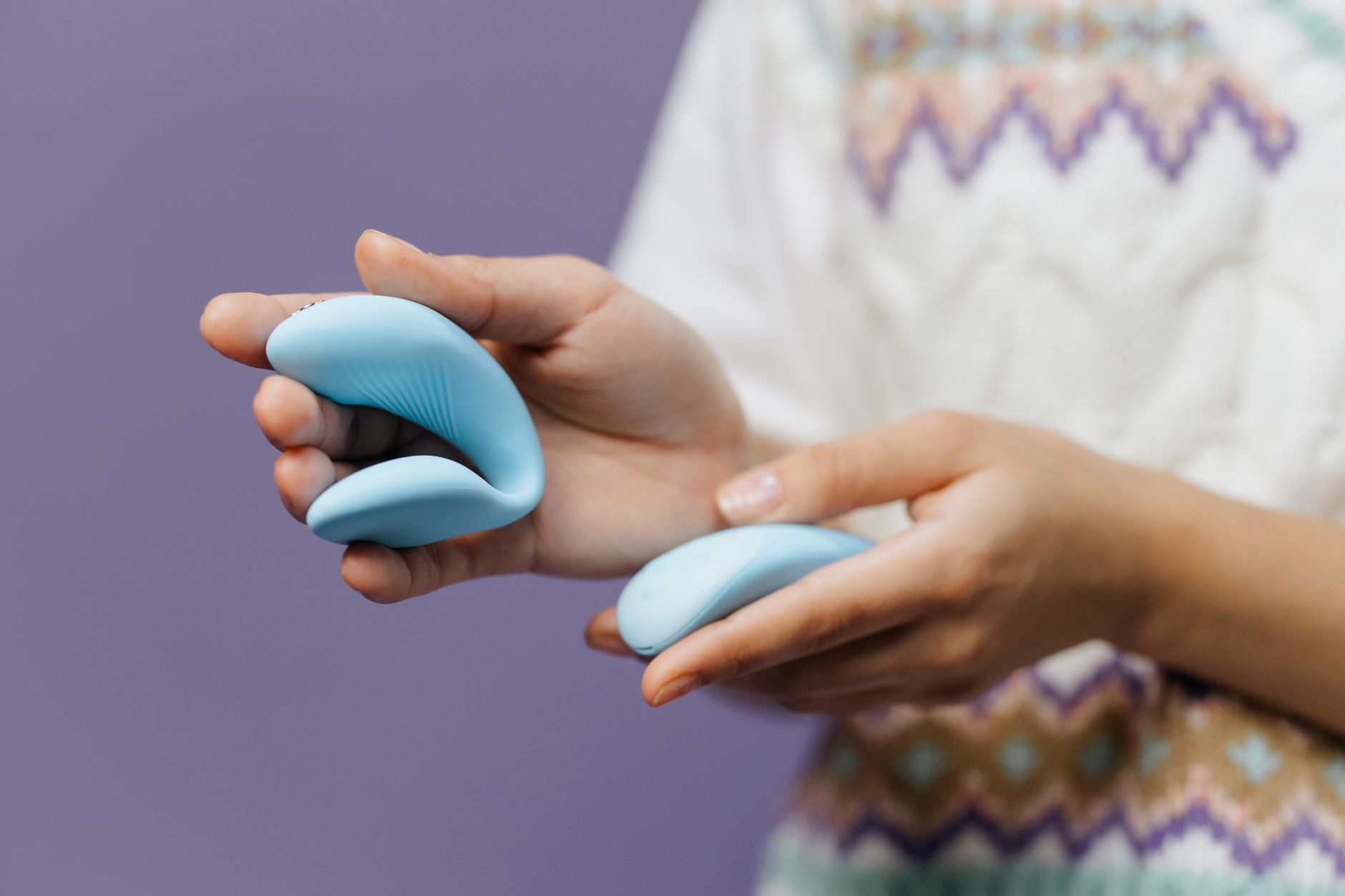
A lemon sucker like the Lem works because it removes the waiting. The vibration patterns and suction intensity are consistent, they're yours to control, and they don't require your partner to "perform" while you try to finish. You're not watching them get tired. You're not managing their emotion about your pleasure.
The Lem's patterns also tend to work faster than manual stimulation for people with performance anxiety, which means you spend less time in that hypervigilant state where you're monitoring everything instead of feeling it. Fewer minutes in your head means you can actually drop into your body.
Most importantly, when you're holding the Lem and you're the one adjusting the intensity and rhythm, your nervous system recognizes you're in control. Control is safety. Safety is what lets you relax enough to actually come.
How to actually use it when the pressure is real
Start before you're with your partner. I'm serious about this. Solo sessions with the Lem aren't a detour from partnered sex. They're reconnaissance. When you use a lemon clitoral vibrator alone, you learn exactly what pattern and intensity your body responds to, how long you realistically take, and what rhythm works. You're gathering data in a pressure-free space.
Tell your partner explicitly what you're doing. "I want to use the Lem during sex because it helps me come faster and more reliably." Not "because you're not good at this" or "because I need help." Because it works. Frame it as a tool that makes the experience better for both of you, which it does. You're not in your head worrying. That's different.
Set the expectation that the Lem changes the timing. If you've been taking 20 minutes before, you might take 8 with the right pattern. Let your partner know upfront. "With the Lem, I usually come in about 10 minutes." This removes the surprise and the "are we there yet" feeling.
Use it solo first, then with your partner present, then integrated into partnered play. This three-stage approach works because each stage raises the stakes slowly. First it's just you and the vibrator. Then your partner is there watching or touching you elsewhere. Then they're integrated into the scene. By the third stage, you've already practiced relaxing into the sensation in increasingly intimate settings.
The conversation that matters more than the vibrator
Here's the hard part. A lemon clitoral vibrator is a tool, and tools are helpful. But if your partner has a fundamental issue with you taking time to come, or resents the presence of a vibrator, that's not a device problem. That's a relationship problem.
A caring partner wants you to come. They want you to feel good. If instead they want you to come quickly, or they want you to come in a specific way, or they want you to be easy to satisfy.those are different priorities. You can't vibrator your way out of that.
Before you introduce the Lem, have the actual conversation. "I've noticed I feel pressure during sex to finish quickly. That pressure makes it harder for me to actually come. I want to try something that might help me relax into it more." Listen to their response. A partner who loves you will be interested in your pleasure. That's the baseline.
What changes when you stop performing
Once you remove the pressure, orgasms often become more reliable, more intense, and honestly more frequent. Not because your body changed. Because your nervous system can finally relax.
Many people tell me that using the Lem in partnered sex actually brought them closer to their partner, not further. When you're not anxious about timing, you can actually pay attention to connection. You're present instead of in your head. Your partner gets to experience you actually enjoying yourself instead of managing your anxiety about their experience of you.
That shift from performance to presence is what changes the relationship.
When to get professional support
If the pressure around your pleasure feels deep or longstanding, a sex therapist or relationship therapist is worth the investment. A lemon vibrator helps with the immediate problem. Therapy helps with why the pressure stuck in the first place.
Similarly, if introducing the Lem into your partnered sex creates conflict or your partner actively resists it, that's worth exploring with someone trained in couples work. You deserve a partner who's invested in your pleasure.
FAQ
How do I know if I'm actually experiencing performance pressure or if my body just takes longer to come?
Performance pressure usually feels like a shift in your mind. Before, you were thinking about sensation. Then at some point you started thinking about time, or your partner's effort, or whether this is taking "too long." If you notice that mental handoff, that's performance pressure. Your body isn't slow. Your nervous system is stressed. With a lemon clitoral vibrator and in a truly pressure-free setting, you'll come faster.
Can I use the Lem while my partner is inside me?
Yes, and many people find this solves the timing issue completely. You control the clitoral stimulation with the Lem while they control penetration. You're not waiting for them to figure out how to give you what you need. You're creating it. It also tends to feel less "performative" because you're both stimulating different areas simultaneously.
What if my partner thinks using a vibrator means they're not enough?
This is something I address in couples sessions regularly. A vibrator isn't a reflection on your partner's capability. It's a tool that works differently than a human hand or body can. You don't use a vibrator because your partner failed you. You use it because it's a different kind of stimulation that your nervous system responds to, especially under pressure. The analogy I use: a washing machine doesn't exist because hands-washing wasn't enough. It exists because machines do a specific job differently and better. Same principle.
How long should I realistically expect to use the Lem before I stop feeling the pressure?
Many people notice a shift within 2-3 partnered sessions with the vibrator. Once your body learns that it can come reliably in a pressure-free environment, your nervous system starts to relax faster. But if the pressure is deeply rooted in relationship dynamics, you might need the tool longer-term, or you might need relationship support alongside it.
Is it weird if I come faster with the Lem than without it?
Not even a little bit. That's literally how it works. Suction and vibration patterns access nerves differently than manual stimulation. Faster doesn't mean better or worse. It means your body responds to this type of stimulation more efficiently. Which is great, especially if you've been anxious about timing.
What if I still feel pressure even with the Lem?
Then the pressure isn't coming from your body or the mechanics of stimulation. It's coming from your brain or your relationship dynamic. That's worth exploring with a therapist who specializes in sexual health or relationships. A lemon clitoral vibrator is fantastic for what it does, but it can't fix a partner who's invested in your staying anxious about your pleasure.
The actual fix
Your pleasure doesn't belong to anyone else. Not your partner, not an imaginary timeline, not some script about how sex should go. When you use a lemon vibrator, you're literally holding the power to feel good. That's not a small thing.
Start solo. Get comfortable with what works. Then bring it to your partner as something that makes you feel good. A partner who loves you will want to watch you feel good. If they don't, that's information too.
The Lem is a tool. But reclaiming your pleasure on your own timeline? That's everything.