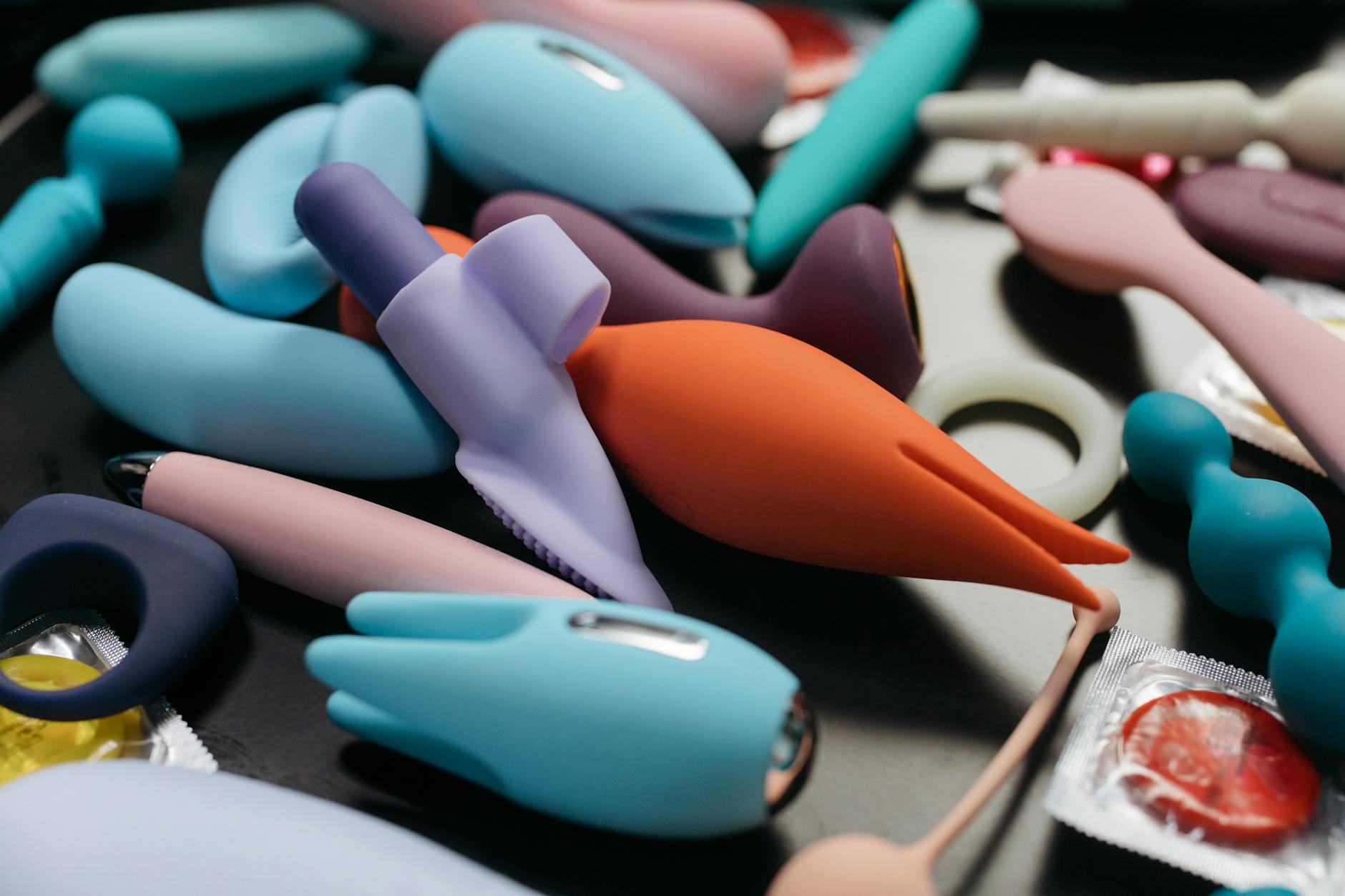
Let's be real about desire after 40
Your libido didn't break. It just changed. And honestly, that's exactly when a lot of people discover what actually works for their body.
Here's what I see clinically: desire does shift after 40. Testosterone dips gradually in people of all genders. Estrogen fluctuates. Life gets louder. The cognitive load of work, relationships, aging parents, and just existing takes up more mental real estate. By the time you hit the bedroom, there's not much bandwidth left for arousal.
But here's the plot twist. That slowdown? It's not a dead-end. It's an opportunity. Because when arousal takes longer to build, you finally have time to discover what actually turns you on, separate from what you thought you were supposed to want.
Why arousal feels different after 40
Three physiological shifts are happening at once:
1. Neurotransmitter changes. Dopamine and serotonin fluctuate as hormones shift. This doesn't kill desire, but it does change the speed at which your brain registers pleasure. You might need more direct, consistent stimulation to trigger the reward response.
2. Genital tissue sensitivity changes. Blood flow to the genitals becomes less automatic. It still happens, but it requires more specific kinds of touch. General touching, kissing, and foreplay might feel pleasant but not activating. That's why clitoral vibrators designed for precision stimulation, like a lemon sucker or air-pulse design, can suddenly feel revelatory.
3. Pelvic floor changes. After 40, the pelvic floor loses some estrogen-dependent elasticity. This affects both arousal speed and how sensations travel through your body. A vibrator that understands this geometry works better than one designed for a 25-year-old's tissue composition.
None of this means you're broken. It means you need different input.
Why lemon clitoral vibrators hit differently
I recommend lemon vibrators specifically to patients over 40 because of how they're engineered.
Most vibrators work through broad, repetitive vibration. That feels good, sure. But after 40, your nervous system often benefits more from precision and suction. A lemon vibrator uses air-pulse or suction technology, which creates rhythmic waves of pressure rather than straight vibration. This is wildly different physiologically.
Here's why that matters: suction patterns stimulate the thousands of nerve endings concentrated in the clitoris without the sustained friction that can feel too intense on tissue that's less plump from hormonal shifts. You get deeper, faster activation with less mechanical stress.
Second, the shape. Lemon vibrators are compact and tapered, designed to sit against the clitoris precisely. There's no guessing about angle or pressure point. After 40, when your body needs specificity to wake up, that focused design saves you 10 minutes of fumbling and gets you to actual pleasure faster.
Third, the control. Most Hello Nancy lemon clitoral vibrators have intuitive intensity patterns you can layer. You can start soft, build gradually, and adjust mid-session without losing focus. That's crucial when arousal doesn't happen on its own timeline.
The mental piece nobody talks about
Here's the uncomfortable truth: low libido after 40 isn't always about hormones. It's often about permission.
Most of us were taught that desire is something that happens to you, usually triggered by an attractive person or a romantic moment. By 40, if you've spent two decades waiting for spontaneous desire that never quite matched your partner's, you've internalized a story: I'm just not that into sex anymore.
Except that's not what's happening. You're just not into sex as it was framed for you.
When you use a lemon vibrator alone, you're doing something radical: you're taking responsibility for your own arousal. You're not waiting for it. You're not hoping a partner will say the right thing or touch the right spot. You're actively generating it. And your nervous system, which has spent decades in a state of half-waiting, finally relaxes.
I've seen this shift in my practice dozens of times. People come in saying they've lost their libido. After six weeks of solo exploration with the right tool, they report desire returning, even within their relationships. Not because anything about their hormones changed, but because they got evidence that their body still works.
How to restart desire when it's stalled
If you're over 40 and your libido has flatlined, try this approach:
Start solo. Zero performance pressure. Use a lemon clitoral vibrator in a private space where you have 20 uninterrupted minutes. Don't aim for orgasm. Aim for curiosity. Notice what patterns feel good. Notice your breath. Notice where sensation lives in your body now, not where it lived at 25.
Build a ritual. Arousal after 40 needs scaffolding. Light a candle. Put your phone in another room. Change your clothes into something that makes you feel like yourself. Your brain needs permission to shift gears. The ritual gives it that signal.
Extend your timeline. Budget 15 to 20 minutes minimum before you expect any physiological response. This isn't a waste. This is you learning your body's current language. Every minute is data.
Experiment with patterns. A lemon vibrator typically has 5 to 10 pulse patterns. Don't stick with pattern one. After your initial warm-up, try each pattern for 10 to 15 seconds. Your clitoris has preferences now that are different from what you think they should be.
Track what works. After a few sessions, you'll know which patterns, which timing, which environment yields the best response. Write it down. Literally. That knowledge is power, especially if you want to bring this back into partnered sex.
When you return to partnered sex with this information, you're not asking your partner to figure out your desire. You're telling them what your body actually responds to now. That's a fundamentally different conversation.
The research backs this up
Studies on sexual satisfaction after 40 show a consistent pattern: people who take an active role in their own pleasure report higher satisfaction, more frequent arousal, and more orgasms than those who wait for desire to show up on its own. That's not surprising, but it is actionable.
One study of 1,000 people over 40 found that those who used external vibrators reported 40 percent more frequent orgasms than those who relied on partnered touch alone. The precision of stimulation matters, especially when arousal pathways have shifted.
Another finding: people over 40 who integrated solo pleasure into their routine reported better emotional intimacy with partners because the pressure was off. When you're not expecting your partner to magically generate desire you couldn't generate yourself, the relationship gets easier.
When to talk to a doctor
If your libido drop came suddenly, or if it's paired with depression, fatigue, or other symptoms, see your GP. Low desire can signal thyroid issues, vitamin deficiencies, or medication side effects. That's worth ruling out.
Hormone shifts are real and sometimes benefit from support. HRT, testosterone therapy, or topical estrogen creams can help if that's the root cause. But you won't know if desire can return on its own until you've actually tried.
Start with a lemon clitoral vibrator and six weeks of consistent solo exploration. Often, desire returns. If it doesn't after that, then the conversation with a doctor becomes more informed and specific.
The actual truth
Low libido after 40 is not a tragedy. It's an invitation to stop performing and start discovering. Your body hasn't failed you. It's just asking for a different kind of attention.
A lemon vibrator works so well for this phase because it's not trying to mimic partnered sex. It's offering precision, control, and a design that understands the specific geometry of pleasure after 40. That combination, plus your own curiosity, is enough to restart desire for most people.
Your pleasure matters. At 40, at 50, at 60. That's not negotiable.
People also ask
Why do lemon vibrators work better than regular vibrators for low libido?
Lemon vibrators use air-pulse or suction technology rather than simple vibration. This creates rhythmic waves of pressure that stimulate the clitoris more efficiently, especially after 40 when tissue composition has changed. They're also compact and designed for precision, which means you spend less time hunting for the right angle and more time actually feeling pleasure.
Can low libido after 40 come back on its own?
Sometimes, but usually not without intervention. Desire requires activation. By using a tool designed for your body's current physiology, you're giving your nervous system permission to respond again. Most people who commit to six weeks of regular exploration report noticeable shifts.
Is it normal for desire to drop significantly in your 40s?
Yes, it's very common. Testosterone drops gradually, life gets busier, and the spontaneous arousal you might have felt at 25 becomes rarer. But common doesn't mean permanent or unchangeable. Desire doesn't disappear. It just requires more specific input.
Should I talk to my partner about using a lemon vibrator solo?
That's your call. Some people prefer to explore privately first, then bring the experience back into partnered sex with specific knowledge about what their body needs. Others want to involve their partner from the start. There's no wrong answer, as long as you're being honest about what you need.
How often should I use a clitoral vibrator to restart desire?
Start with 2 to 3 times per week for at least four weeks. Consistency matters more than frequency. Your nervous system needs repetition to recognize that pleasure is available again. After four weeks, you'll have enough data to know what works and can adjust from there.
Does using a lemon vibrator mean something's wrong with my relationship?
No. Using a vibrator is about your relationship with your own body. That's separate from your relationship with your partner. In fact, when you know what your body actually needs, partnered sex often improves because the pressure to perform spontaneous desire lifts.
Next steps
If this resonates, the next step is permission. Not from a partner, not from your doctor, but from yourself. Your pleasure after 40 isn't frivolous. It's not a luxury. It's part of staying connected to your own body and your own capacity for joy.
Start with a lemon clitoral vibrator, a timer, and an afternoon with no plans. See what your body remembers. Often, it remembers more than you think.
Questions about how to approach this conversation with a partner or need personalized guidance? Reach out. That's what I'm here for.